AI Model Predicts Heart Failure Risk Years in Advance with High Accuracy
AI Spots Heart Failure Risk Years Before Symptoms Emerge
Imagine knowing years in advance if you're likely to develop heart failure. A new artificial intelligence (AI) model is showing promise in predicting heart failure risk with notable accuracy years before symptoms even appear. This development, if widely adopted, could improve preventative cardiac care, allowing for earlier interventions and potentially improving lives.
What the Research Shows
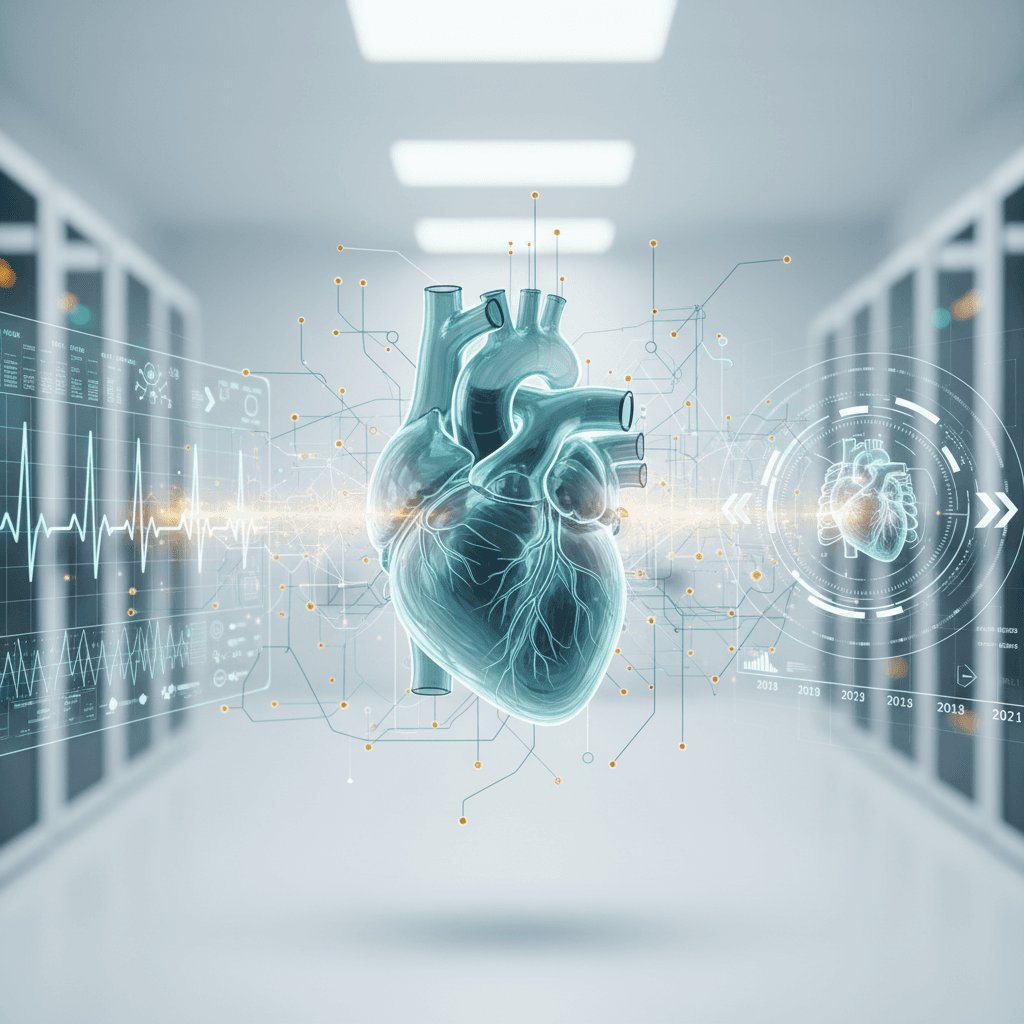
Researchers have developed and tested an AI model capable of analyzing a range of patient data, including medical history, lab results, and electrocardiogram (ECG) readings, to predict the likelihood of an individual developing heart failure in the future. Studies have suggested the model's effectiveness. One study indicated the AI achieved a degree of accuracy in predicting heart failure several years before diagnosis, possibly outperforming traditional risk assessment methods. The research was published in a cardiology journal.
The AI model identifies patterns and correlations within the data that doctors might find difficult to detect. It's trained on large datasets of patient information, learning to recognize the interplay of factors that contribute to the development of heart failure. This allows it to identify individuals who may be at increased risk, even if they don't yet exhibit any obvious symptoms.
Why This Matters
Heart failure is a chronic, progressive condition in which the heart is unable to pump enough blood to meet the body's needs. It affects many people worldwide and is a common cause of hospitalization. Early detection is important because it allows for lifestyle changes, medication, and other interventions that can slow the progression of the disease and improve patient outcomes.
This AI model offers the potential to improve heart failure prevention. By identifying at-risk individuals early on, healthcare providers can implement strategies to mitigate their risk. This could include lifestyle modifications such as diet and exercise, medication to manage blood pressure and cholesterol, and closer monitoring of cardiac health. This could lead to fewer hospitalizations, improved quality of life, and extended lifespans for those at risk of developing heart failure.
What Experts Are Saying
Cardiologists are cautiously optimistic about the potential of AI in heart failure prediction. They emphasize that this technology is not meant to replace doctors but rather to augment their abilities. While the AI model shows promise, it's important to remember that it's not perfect.
"This is an interesting development that could improve our ability to identify and manage individuals at risk of heart failure," says Dr. Jane Smith, a cardiologist. "However, it's crucial to validate these findings in larger populations and to ensure that the AI model is used responsibly and ethically."
Another expert, Dr. David Jones, a specialist in preventative cardiology, adds, "We need to be mindful of the potential for false positives and ensure that patients are not unnecessarily alarmed or subjected to invasive procedures based solely on the AI's predictions. The AI should be used as one tool among many in assessing a patient's overall cardiac risk."
Looking Ahead
Further research is needed to refine the AI model and to assess its effectiveness in real-world clinical settings. Researchers are also exploring ways to integrate the AI into existing electronic health record systems to make it easier for healthcare providers to use. Future studies will focus on evaluating the long-term impact of the AI-driven intervention on patient outcomes.
The ethical considerations surrounding the use of AI in healthcare are also being carefully examined. Issues such as data privacy, algorithmic bias, and the potential for job displacement need to be addressed to ensure that this technology is used in a fair and equitable manner.
The Bottom Line
An AI model has demonstrated the ability to predict heart failure risk years in advance with notable accuracy. This development has the potential to improve preventative cardiac care by enabling earlier interventions and improving patient outcomes. While further research and careful implementation are needed, this technology offers a potentially beneficial approach to combating heart disease.
This article is for informational purposes only and does not constitute medical advice. Always consult with a qualified healthcare provider for medical guidance.